Interview with Maia Sobczak from Qmam Kasze
Interview with Maia Sobczak, author of books and the blog “Qmam Kasze”
Maia has turned her morning matcha latte into an inseparable daily ritual. She starts each day with its plant-based version. She values most the cleansing, energizing, and spirit-nourishing effects of Japanese matcha. She talks about her cooking and holistic approach to all matters with Marianna Medyńska.

You lead an active and intense lifestyle – you provide dietary consultations, you've published three books, you organize workshops and lectures, and you write a blog that recently got a refresh. At the same time, you are a proponent of slow life. How do you manage to live stress-free while accomplishing so much? Do you have any techniques that help you reconcile this?
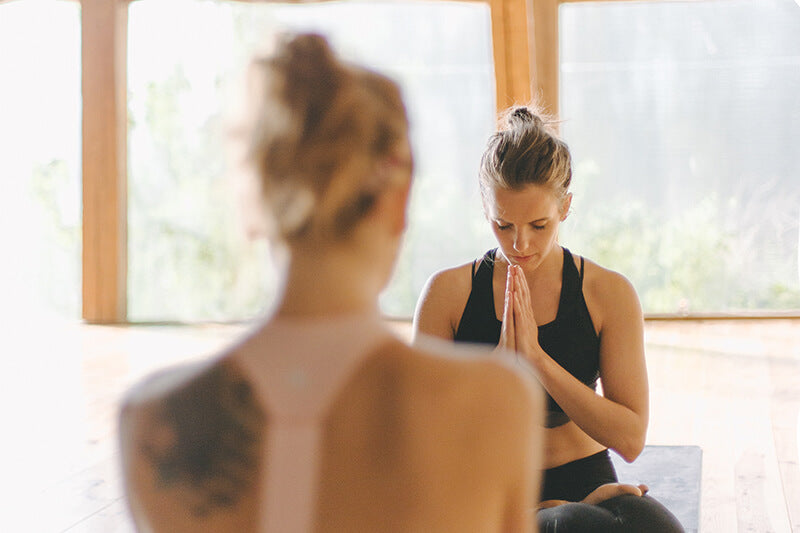
I don't have magic secrets, but several daily practices that help me ground myself. Every morning, I practice yoga, which allows me to calm down and start the day well. I find space, calm my breath and thoughts. I also dry brush my body to stimulate circulation and pleasantly awaken my skin. Then a cup of boiling water and a shared matcha latte, usually drunk by the whole family in bed. Only then do we throw ourselves into the swirl of duties – everyone has them, especially if you're doing many things at once. I won't pretend that stress and the ever-accelerating pace of life don't affect me. I try to slow down as much as I can and not get caught up in this hamster wheel, but it varies. At the end of the day, we try to go for a longer walk, also together, to spend time with each other and breathe in nature. That's where I draw true power and peace. It shows me what's truly important.

Nature, and thus natural healing, is your specialization. How did your interest in Chinese medicine and Ayurveda begin?
I simply always felt that we are a whole and not isolated pawns. I started to explore this idea and discovered Chinese medicine, which is its pillar. Ayurveda, the first recorded medicine in the Hindu Vedas, also speaks of all this. I love the language it uses to describe phenomena and laws of nature, its approach to the world, and precisely this broad perspective. It's what allows for the right distance. Yes, distance is key – you have to find it and make sure it doesn't slip from your grasp.
Don't you encounter any difficulties practicing this approach in the Polish reality?
It's not difficult because most of these practices happen in the mind. You just need to observe well and be open, curious about other people... and absolutely be a realist.
You're drawn to Eastern healing practices. When did you first try matcha?
At a friend's house whose wife is Japanese. I also drank it in Asia, which is my favorite destination, so it was impossible not to come across it somewhere. I ate green Asian sweets and steamed buns. Matcha really appealed to me.
How is matcha consumed in your home? Does your family share your attitude towards it?
Yes, we all like it and drink it together in the morning. We use nut, seed, or oat milk. It's the most balanced drink for us in terms of taste. Even Radocha, our furry four-legged friend, fell in love with it completely. We pass the bowl around, and she whimpers not to be forgotten. Sometimes I use matcha in recipes. Recently, for example, I made green icing for my no-waste doughnuts. I add it to smoothies, granola, and homemade pudding. I coat sweet energy balls in it and add it to homemade bars made from dried fruits and nuts.
You notice how certain flavors affect well-being and vice versa – you adjust them to circumstances and moods. How does a bowl of matcha affect you? Which of its properties do you value most?
On the one hand, we have matcha's nutritional values, its relaxing and energizing effect, and cleansing. On the other hand, its ceremonial aspect, an element of meditation, a ritual connected with mindfulness. I embrace them all! I love that matcha gives a great energy boost that doesn't drain our built-in battery, but rather recharges it. In my own body, I also notice its effect on improving digestion and hydration, especially in the version with milk, which is particularly desirable for my constitution.
Do you have a favorite recipe that would convince others to try matcha?
For me, it's a matcha latte, though I know it might not convince everyone right away. Nothing by force, tastes mature over time.
Where do you find the golden mean between localism and benefiting from the riches of all corners of the world?
I buy what piles up on stalls, adding spices from around the world or just plain salt, pepper, and various herbs, without which I cannot imagine cooking. One could say that a green element is, in my opinion, necessary. Firstly, it cleanses and oxygenates the blood, secondly, it supports digestive fire, giving indescribable pleasure to the intestines. And thirdly, because green is simply delicious.
What is your everyday cooking like?
On a daily basis, I eat quite simply, but I like creative cooking. The kind that's gathered, where different products combine. I am a very open cook, although you won't find meat or fish in my kitchen. I always look for solutions, I don't focus on what's missing, but on finding a way out of a situation. This approach works beautifully in other aspects of life.
Is the most important goal in your cooking a healthy body or spirit? I know they go hand in hand, but is it easier to start with one to set in motion a series of changes in the body?
In holistic medicine, it is said that most of our ailments are diseases of the spirit; the body is merely their manifestation. But we are more eager to notice signals from the body. Note that only when something hurts us – really, physically – do we react to get rid of that discomfort. How much simpler and faster it would be if we could listen to ourselves and react to the slightest symptoms. The spirit influences the body, and the body influences the spirit, all the time, even in the deep phase of sleep. Their health is interdependent and equally important.
So neither could function without the other?
We are a whole, beautiful and unique. The body is the home for the soul, without it, we wouldn't exist. There is a moment when these two aspects separate. When the shen, or spirit, journeys to heaven, and the yin, or body, to the earth. This means, neither more nor less, the end of our earthly journey. In every other case, they are inseparable.
How to cook to take care of them equally?
Cooking and eating are about satiating oneself with the energy of a given product. About nourishing the body with nutrients, and the spirit with love. The quality of the product is of immense importance, but equally important are aspects such as thermal processing, time of day, and even the intention with which one cooks and eats. The key are product combinations, with the most individual approach possible. Not everything will be constructive or nourishing for everyone! After all, we differ beautifully from each other, we are of different ages and psycho-physical conditions, so different elements will be more desirable for each. I cook very intuitively, I listen to my body, I check after what I feel a rush of good energy, and after what I am mainly tired, I have not-so-nice thoughts. What I eat enters me, creates me and builds me up or, conversely, pollutes me and presses me to the ground. It is worth thinking about this and not getting drawn into manipulation. There is no single recipe for health, nor one ideal diet.
Tell us more about feeding with this love. What role does food play in your life, beyond its default function of nourishing the body?
Eating and drinking are our fuel. Thanks to them, we can experience the joys of life in good condition. The better we eat, the more broadly smiling and relaxed our thoughts are. Sounds good, doesn't it? But food itself is also love. It should always be respected and not wasted. And it must be tempting. One should even feel a certain excitement that what we see before us, we will soon eat. This is important because it engages the entire complex digestive system and prepares it for work. Only food properly digested has a chance to be distributed further to the tissues, only then will even our smallest cells, whose existence we are not even aware of, be nourished. As you can see, body and spirit once again join forces here.
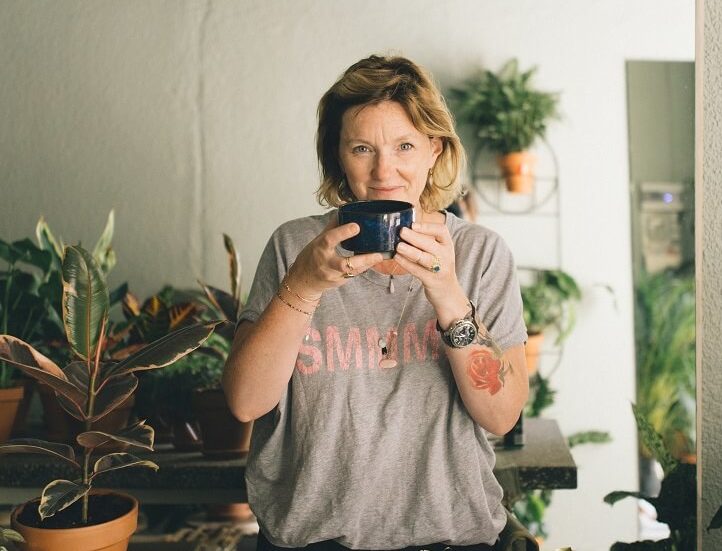
Maia Sobczak – culinary author, blogger, yoga and holistic lifestyle teacher, food stylist. She collaborates with KUCHNIA, KUKBUK, GAGA, and JOGA magazines; her recipes can be found, among others, in Zwierciadło, Super Linia, Cosmopolitan, and Elle. Co-author of the book "Najlepsze przepisy dla całej rodziny" (Best Recipes for the Whole Family), author of the bestselling "Qmam Kasze – czyli powrót do korzeni" (I Get Groats – A Return to Roots) and "Qmam Kasze – do ostatniego okruszka" (I Get Groats – To the Last Crumb). She is passionate about the influence of natural ingredients on the body and psyche, believing that the secret to happiness is hidden in everyday life, simplicity, ordinary gestures, and good foundations are built from childhood. Mother of 11-year-old Hugo, the biggest critic of her culinary endeavors. She believes that the kitchen is an amazing, unique place that connects and fills people with love. For her, cooking is like a melody, composed of different flavors, textures, and resonances, and real food can work wonders.
Thanks to Roślinny Stor for assistance with the photo shoot!