Hojicha – roasted tea
What is hojicha?
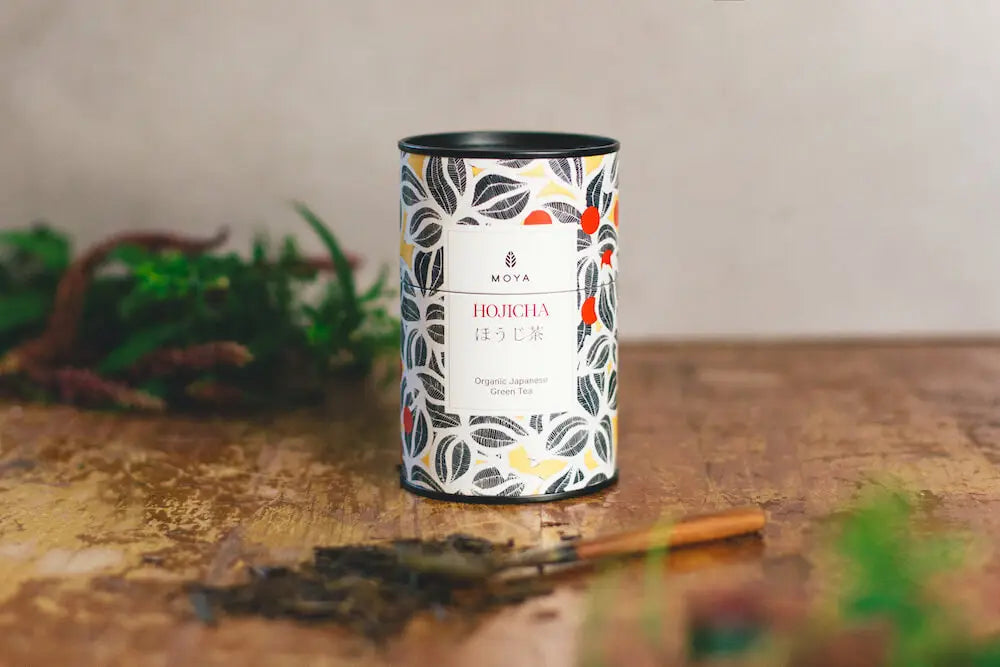
Hojicha green tea stands out from other Japanese green teas. The main difference lies in the roasting process that's part of its production, which gives it a smoky aroma that's especially appealing to black tea drinkers and whisky fans alike. Once brewed, its colour is dark and doesn't resemble that of other green teas at all. The name hoji-cha itself means "roasted tea". Moya Hojicha is a blend of kukicha – tea made from the stems of the tea plant – and bancha, a very popular everyday tea in Japan, although in many places you'll also find hojicha made from sencha leaves. Thanks to its distinctive, caramel-and-nut flavour, it's a great choice for people who are sceptical about green tea, as well as coffee lovers. Hojicha has been winning hearts since 1920, when tea leaves and stems were first roasted in Kyoto, creating an infusion with a wonderfully comforting flavour.
Hojicha, different ways
One popular way to enjoy this Japanese green tea is with milk, which once again highlights its similarity to black tea, often drunk with milk across Europe. Hojicha latte is made using powdered hojicha leaves – hojicha powder – which is mixed with water, much like powdered green matcha tea. This drink can be enjoyed either hot or cold. Milk or a plant-based drink brings out the tea's flavour beautifully, satisfying coffee and cocoa lovers too. In our matcha bar in Warsaw, we also make a Vietnamese-style hojicha, with a touch of condensed milk. Alternatively, you can prepare it the classic way, by pouring water at around 80°C over loose hojicha leaves and enjoying its aromatic infusion. For all these reasons, it's well worth trying this unique tea. Powdered hojicha also makes a wonderful addition to desserts – on our website you'll find a recipe for delicious bars made with this powdered tea.
The properties of hojicha
What makes hojicha such an interesting Japanese green tea is its low caffeine content. The roasting process not only removes the bitterness typical of green tea, but also reduces the level of stimulating compounds, meaning it can even be enjoyed in small amounts by children and pregnant women. This also means you can savour hojicha's flavour at any time of day. Its wonderful taste isn't the only reason to reach for hojicha green tea, though. The catechins it contains help lower blood pressure and regulate cholesterol and blood sugar levels in the body. The antioxidants green tea is known for also help slow down cellular ageing, including in the skin and the brain.
Moya's hojicha comes from organic farms, making it free from heavy metals and pesticides. Drunk after a meal, it aids digestion and can bring relief to sensitive stomachs. It's also recommended by followers of the macrobiotic diet. Next time someone tells you they're not a fan of the "grassy" taste of green tea, suggest they try hojicha – there's a good chance it'll change their mind!
How to prepare hojicha green tea
Brewing hojicha isn't complicated. For 2-3 grams of dried leaves, prepare 150ml of water at a temperature between 75 and 90 degrees. Since hojicha is a roasted tea, you can use a slightly higher temperature than you would for other green teas. Brewing time can range from 1 to 3 minutes, depending on how strong you'd like the infusion to be. Once brewed, the leaves can be used up to 3 more times, so you can keep enjoying this delicious, aromatic tea.