Article: Does-matcha-support-weight-loss
Does-matcha-support-weight-loss
Can a cup of matcha genuinely help with weight loss? It's a question many people searching for natural support in reducing body weight ask themselves. Matcha – powdered green tea – has grown in popularity not only for its distinctive flavour and beautiful green colour, but above all thanks to its well-documented health properties.
Matcha can support the weight-loss process, though it isn't a solution in itself. Thanks to its high content of catechins (EGCG) and caffeine, it can speed up metabolism, increase fat burning during physical activity, and help with better appetite control. The best results come from regularly drinking matcha alongside a healthy diet based on a calorie deficit and regular physical activity.
Does matcha really speed up metabolism and fat burning?
Matcha can support metabolism and the fat-burning process thanks to its high content of catechins and caffeine, though its effect is moderate and won't replace the fundamental principles of weight reduction. With regular intake of catechins, especially EGCG, it's possible to increase daily energy expenditure by around 50–100 kcal and improve fat burning during physical activity. The key to success remains a calorie deficit and regular activity – matcha strengthens the effects of a well-planned diet, it doesn't replace it.

Does matcha increase resting metabolic rate?
Yes, but to a moderate degree. Regular consumption of green tea, including matcha, can raise resting metabolic rate by 3-4%, which translates to burning an extra 50-100 calories a day.1 This effect comes from the action of catechins, especially EGCG, which stimulate thermogenesis – the process by which the body produces heat. Seeing noticeable results requires consistency. Studies indicate that a positive effect on metabolism appears after around 12 weeks of regularly consuming 2-4 grams of matcha a day.2
⚠️ Important!
The metabolic effect weakens if drinking matcha isn't combined with physical activity. Matcha without exercise won't produce significant effects – it's only the combination of both that brings the best metabolic results.
The effect of matcha on fat burning during exercise
Studies using green tea extract (GTE) have shown that people supplementing with catechins burn on average around 10–20% more fat during moderate physical exercise.3 Matcha, as a rich and concentrated source of the same catechins, can produce similar results. This effect stems from the synergy between caffeine and EGCG, which together prompt the body to draw more intensively on its fat reserves as an energy source. It's worth noting, however, that these specific studies were carried out on extracts, and results can vary depending on dosage and the individual.
Worth knowing:
- Recommended dose: 1–2 grams of matcha (1–2 teaspoons) per cup.
- Optimal timing: 30–60 minutes before moderate-intensity exercise (brisk walking, cycling, jogging).
- L-theanine means the energy is released gradually over 3–4 hours – without the sharp spikes and jitters typical of coffee.
Regular use over 12 weeks may help reduce body weight by 1–2 kg and improve metabolic adaptation, though matcha remains a supporting tool, not a substitute for consistent training. Matcha isn't a magic solution for weight loss – it's a valuable ally that works best as part of a mindful lifestyle.
The role of catechins and EGCG in weight loss
EGCG (epigallocatechin gallate) is the most potent catechin found in matcha. It works on several levels at once: it inhibits the enzymes responsible for breaking down noradrenaline (a hormone that stimulates fat burning), increases thermogenesis, and supports metabolic processes within fat cells. What's more, EGCG also has anti-inflammatory effects – and it's precisely chronic inflammation in the body that often makes weight loss more difficult. Catechins also improve cell sensitivity to insulin, which makes it easier to control blood sugar levels and reduces cravings for sweets.

Matcha provides around 100–200 mg of EGCG per serving (2g)4
When drinking matcha, we consume the whole, powdered tea leaves, which means we take in a greater amount of catechins. Matcha has roughly 2–5 times more EGCG per serving than a typical green tea infusion. The actual EGCG content depends on the quality of the raw material, growing methods, and how the drink is prepared.
Green tea provides around 20–50 mg of EGCG per cup5
A classic infusion provides fewer catechins, since the leaves are only steeped, not consumed whole. As a result, the amount of EGCG in a single cup is usually lower than in a serving of matcha.

How much matcha should you drink a day to support weight loss without risk?
A safe and effective dose of matcha for supporting weight loss is 2-4g a day, equivalent to 2-4 cups of the drink. This amount provides the benefits without exceeding a safe level of catechins and caffeine. Exceeding safe doses can lead to side effects such as difficulty absorbing nutrients – especially with long-term use. The key is consistency and moderate dosing – in this case, more doesn't mean better.
Is matcha safe for the liver when drunk daily for weight loss?
At the recommended dose of 1-2 grams of matcha a day, no negative impact on the liver has been observed in healthy individuals. Green tea infusions are considered generally safe by EFSA. The risk of hepatotoxicity mainly concerns long-term use of highly concentrated supplements containing catechins, especially EGCG. Doses of around 800 mg of catechins a day from supplements can increase the likelihood of liver damage. In practice, this means the risk is linked mainly to taking concentrated extracts, not to drinking a few cups of matcha a day as part of a standard diet.6
Why does matcha work for some people and not others?
Differences in how effective matcha is come down mainly to gut microbiome. People with a rich, diverse bacterial flora experience stronger metabolic effects, because their gut bacteria convert catechins (especially EGCG) into active metabolites – which increases their absorption and potency. Studies confirm the direction of this relationship, though the exact scale varies between "fast" and "slow" catechin processors.7
A problem arises with dysbiosis – an imbalance in the bacterial flora. After a course of antibiotics, on a diet low in fibre, or with excess sugar and processed food, less EGCG reaches the bloodstream. The matcha is the same, but the microbiome can't fully process it.
How can you strengthen your microbiome so matcha works more effectively?
- Fibre – pair matcha with fibre-rich meals – studies confirm a beneficial effect on the composition of the microbiota and catechin absorption.
- Probiotics – kefir, natural yoghurt, sauerkraut, kimchi – fermented foods can positively influence the diversity of bacterial flora (the effect depends on the product and the starting state of the microbiome).
-
Avoid dysbiosis – limiting sugar and processed food protects the microbiome from degrading and allows it to process catechins more effectively.
Does matcha block iron absorption?
The tannins and polyphenols present in matcha can reduce iron absorption from a single meal by as much as 50–70%. Polyphenols bind with iron in the intestines, forming complexes the body can't properly absorb. This is especially relevant for people on vegan, vegetarian, or low-calorie diets while losing weight, where the risk of iron deficiency is already elevated.8
How to drink matcha without risking anaemia?
- Drink matcha at least 1–2 hours before or after iron-rich meals – this is the key timing strategy.
- Vitamin C consumed alongside a meal can partly offset matcha's inhibiting effect – lemon juice or peppers with lunch is a good idea.
- Avoid drinking matcha if you're taking iron supplements.
⚠️Important!
People with coeliac disease should take particular care, limiting matcha to 1 cup a day and regularly monitoring their ferritin levels.
Does matcha work better for weight loss than regular green tea?
Matcha provides up to 2–5 times more EGCG per serving than a classic green tea infusion, depending on its quality and preparation. Matcha also contains more L-theanine, which stabilises energy and helps control appetite during weight loss. While both teas support weight loss, matcha is a more concentrated source of active compounds. If you're after maximum metabolic effects, matcha may be a better choice than regular green tea.

Matcha also contains considerably more chlorophyll thanks to its shade-grown cultivation – this supports detoxification, which indirectly translates into better metabolic effects. The synergy of caffeine and L-theanine provides stable, long-lasting alertness without the jitters, along with better appetite control – crucial when losing weight.
Does the type of matcha affect weight loss?
The quality of matcha can matter for its weight-loss effects – the higher the grade, the more active compounds it contains.

Ceremonial Matcha – the highest EGCG concentration
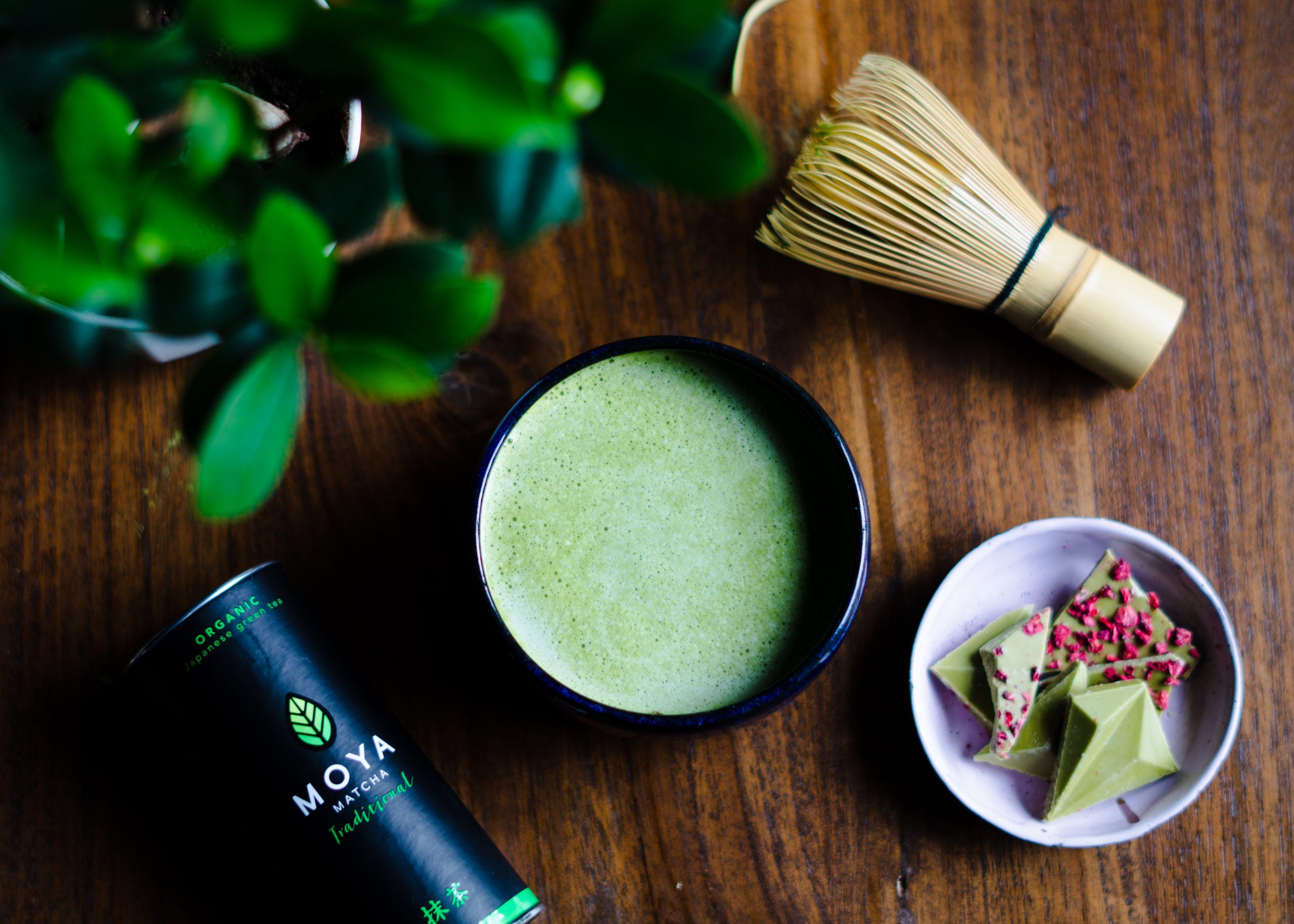
Young, hand-picked leaves from the first harvest. A higher concentration of L-theanine and catechins than lower grades. A mild, lightly sweet flavour – perfect for drinking on its own. The best option for anyone using matcha as everyday support for weight loss. Try our ceremonial matchas Moya Matcha Luxury or Moya Matcha Traditional.
Matcha Daily/Culinary – less EGCG, but still considerably more than green tea
A more intense, slightly bitter flavour. An excellent choice for smoothies, lattes, and baking. Great value for money – it provides enough catechins to effectively support your metabolism. Check out Moya Matcha Daily or Moya Matcha Culinary.

Matcha as part of a weight-loss strategy
Matcha isn't a magic solution for weight loss, but it can effectively support the process when used sensibly as part of a broader weight-loss strategy. Its effect comes from the synergy of catechins (especially EGCG), caffeine, and L-theanine, which together increase energy expenditure, intensify fat burning during physical activity, and stabilise energy levels while helping control appetite.
The best results come from regularly drinking matcha, particularly before exercise, combined with a balanced diet, a healthy gut microbiome, and regular physical activity. Choosing high-quality matcha and avoiding excessive doses – which can put a strain on the liver or interfere with iron absorption – is also essential.
- Jówko E. Green Tea Catechins and Sport Performance. In: Lamprecht M, editor. Antioxidants in Sport Nutrition. Boca Raton (FL): CRC Press/Taylor & Francis; 2015. Chapter 8. Available from: https://www.ncbi.nlm.nih.gov/books/NBK299060/ ↩︎
- Gholami F, Antonio J, Iranpour M, Curtis J, Pereira F. Does green tea catechin enhance weight-loss effect of exercise training in overweight and obese individuals? a systematic review and meta-analysis of randomized trials. J Int Soc Sports Nutr. 2024 Dec;21(1):2411029. ↩︎
- Hodgson AB, Randell RK, Jeukendrup AE. The effect of green tea extract on fat oxidation at rest and during exercise: evidence of efficacy and proposed mechanisms. Adv Nutr. 2013 Mar 1;4(2):129-40. doi: 10.3945/an.112.003269. ↩︎
- Weiss DJ, Anderton CR. Determination of catechins in matcha green tea by micellar electrokinetic chromatography. J Chromatogr A. 2003 Sep 5;1011(1-2):173-80. ↩︎
- ConsumerLab.com. (2024). ConsumerLab Tests Identify Less EGCG and Lead and Arsenic in Some Green Tea Products. ConsumerLab.com. https://www.consumerlab.com/news/best-green-tea-2024/02-15-2024/
↩︎ - EFSA Panel on Food Additives and Nutrient Sources added to Food (ANS); Younes M, Aggett P, Aguilar F, Crebelli R, Dusemund B, Filipič M, Frutos MJ, Galtier P, Gott D, Gundert-Remy U, Lambré C, Leblanc JC, Lillegaard IT, Moldeus P, Mortensen A, Oskarsson A, Stankovic I, Waalkens-Berendsen I, Woutersen RA, Andrade RJ, Fortes C, Mosesso P, Restani P, Arcella D, Pizzo F, Smeraldi C, Wright M. Scientific opinion on the safety of green tea catechins. EFSA J. 2018 Apr 18;16(4):e05239. ↩︎
- Li Q, Stautemas J, Omondi Onyango S, De Mey M, Duchi D, Tuenter E, Hermans N, Calders P, Van de Wiele T. Human gut microbiota stratified by (+)-catechin metabolism dynamics reveals colon region-dependent metabolic profile. Food Chem. 2023 May 15;408:135203. ↩︎
- Wiangnon, Surapon. "Green Tea Consumption Prevented Iron Overload: A Case Report of Thalassemia Intermedia." Journal of Hematology and Transfusion Medicine, 2014. ↩︎
- Kenta Kimura, Makoto Ozeki, Lekh Raj Juneja, Hideki Ohira, l-Theanine reduces psychological and physiological stress responses,
Biological Psychology, Volume 74, Issue 1, 2007, Pages 39-45, ISSN 0301-0511, https://doi.org/10.1016/j.biopsycho.2006.06.006. ↩︎ - ConsumerLab.com. (2024). ConsumerLab Tests Identify Less EGCG and Lead and Arsenic in Some Green Tea Products. ConsumerLab.com. https://www.consumerlab.com/news/best-green-tea-2024/02-15-2024/
↩︎ - Kochman J, Jakubczyk K, Antoniewicz J, Mruk H, Janda K. Health Benefits and Chemical Composition of Matcha Green Tea: A Review. Molecules. 2020 Dec 27;26(1):85. doi: 10.3390/molecules26010085. ↩︎
- Ošťádalová, Martina & Tremlová, Bohuslava & Pokorná, Jana & Král, Martin. (2015). Chlorophyll as an indicator of green tea quality. Acta Veterinaria Brno. 83. S103-S109. 10.2754/avb201483S10S103. ↩︎